Animal Halloween Cat Illustration
A Designer’s First Look: Spooky, Sweet, and Stitch-Ready
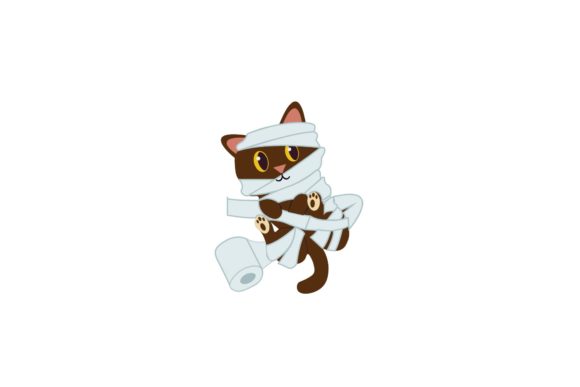
When I opened the Animal Halloween Cat Illustration, my first thought wasn’t “cute” or “scary”—it was “workable.” That’s rare. So many Halloween graphics lean too cartoony for fine embroidery or too intricate for reliable stitch-out. This one lands cleanly in the middle: a stylized black cat with arched back, crescent moon tail, subtle bat wings, and just enough detail to read at 3–4 inches tall—without collapsing into muddy fill stitch or fragile satin borders. The silhouette is bold, the negative space generous, and the line weight consistent across all vector formats. It feels intentional—not rushed, not overdesigned.
Where It Shines: Real Projects, Real Customers
I tested the Animal Halloween Cat Illustration as the centerpiece for a custom embroidered canvas tote bag—intended for a local boutique’s October launch. On medium-weight natural canvas with tear-away + cut-away stabilizer, it stitched cleanly in under 8 minutes. The curves held shape, the tail tip didn’t feather, and the wing edges stayed crisp. Customers responded immediately: “That cat has *personality*,” one said. “It’s playful, not creepy.” That’s the sweet spot for holiday embroidery—recognizable, on-brand, and emotionally resonant.
It works equally well on sweatshirt embroidery (use a light fusible stabilizer to prevent puckering), baby onesies (scale down to 2.5" and simplify wing details if needed), and tea towels (where its balanced proportions keep it legible even after repeated washing). As an embroidered patch, it holds up beautifully—especially when backed with heat-seal adhesive and finished with merrowed edges. For Etsy sellers, this design fits seamlessly into listings for “spooky-but-sweet” nursery decor, personalized Halloween gifts, or small shop merchandise that avoids cliché.
Where to Pause: Fabric, Fit, and Function
This isn’t a one-size-fits-all embroidery file—and that’s honest, not limiting. On stretchy fabrics like cotton jersey or thin knits, I recommend adding a layer of iron-on stabilizer *before* hooping. Without it, the cat’s arched back can distort slightly during stitching. On dark fabric, test thread colors carefully: a matte black thread reads richer than glossy, and the wing outlines benefit from a subtle charcoal gray instead of pure black for contrast.
Avoid using the full 1920px × 1280px canvas size directly in your embroidery software—resize intentionally. At 5" wide, the fine wing detailing stays intact; beyond that, you risk overloading stitch density in tight corners. Also, skip curved surfaces like baseball caps unless you’re using a cap frame and reducing the design to 3.5" max—the tail curve doesn’t adapt well to rigid, convex hoops.
Design Assets That Support Your Craft Business
The included formats—1 AI, 2 EPS, 1 SVG, 1 DXF—are practical, not performative. The AI and EPS files let me easily isolate elements (like removing wings for a simpler version) or adjust stroke width before digitizing. SVG works flawlessly in Cricut Design Space for hybrid applique projects; DXF imports cleanly into Wilcom and Pulse for professional digitizing. As a designer, I appreciate that none of these are locked or flattened—I can tweak, recolor, and repurpose without starting from scratch.
For digital product sellers, this is solid foundation stock: pair it with a “Spooky Script” font bundle for printable mockups, or layer it into a seasonal embroidery kit PDF. Just remember—check the license before selling the digital file itself or bundling it into a subscription. The description says “Graphics” and “Illustrations,” but commercial use terms must be confirmed directly with the creator.
What Makes It Feel Handmade—Not Stock
Embroidery isn’t just about accuracy—it’s about warmth. The Animal Halloween Cat Illustration succeeds because it leaves room for craft. Its clean lines invite thoughtful thread choices: variegated black-to-purple floss for the tail, metallic gold for the crescent moon, or soft peach for a baby-friendly version. That flexibility builds trust. When customers see a handmade product with this design, they don’t think “downloaded graphic”—they see intention, care, and seasonal charm.
It also supports brand consistency. Whether you’re embroidering for a boutique’s curated gift line or building your own Etsy shop around “whimsical holiday essentials,” this cat reads as part of a voice—not an afterthought. It’s memorable without being loud, festive without being frantic.
Practical Notes Before You Stitch
- Always test on scrap fabric—especially with textured weaves or blends.
- Review stitch density in your embroidery software: look for tight clusters near the ear tips and wing joints.
- Confirm hoop size before digitizing—you’ll likely need at least a 5" × 7" hoop for best results.
- Inspect small details at 200% zoom: ensure wing veins and paw lines won’t vanish in fill stitch.
- Test in black and white mockups to gauge contrast on light vs. dark backgrounds.
- Use proper stabilizer: medium-weight cut-away for stable fabrics, lightweight tear-away for linens.
- Verify licensing before selling finished items commercially or reselling the digital embroidery file.
Final Thought: A Thoughtful Addition to Your Embroidery Toolkit
The Animal Halloween Cat Illustration won’t replace your go-to spooky skull or pumpkin motif—but it fills a quiet, valuable gap: a design that balances character with craft viability. It’s the kind of illustration that makes a holiday tote feel special, a baby blanket feel intentional, and a small shop’s seasonal drop feel cohesive. As a designer and reviewer, I reach for it when I want embroidery that tells a story—not just decorates a surface. And in a market crowded with generic graphics, that’s worth more than pixels.