Animal Underwater Vector: A Designer’s Real-World Embroidery Review
As someone who’s stitched hundreds of custom pieces—from boutique baby onesies to Etsy-famous tote bags—I opened Animal Underwater Vector expecting whimsy, but what I found was something more useful: a quietly versatile illustration that bridges playful theme and practical execution. It’s not flashy, but it’s thoughtful—like the kind of design you keep coming back to because it just works.
First Impressions: Light, Layered, and Ready for Stitching
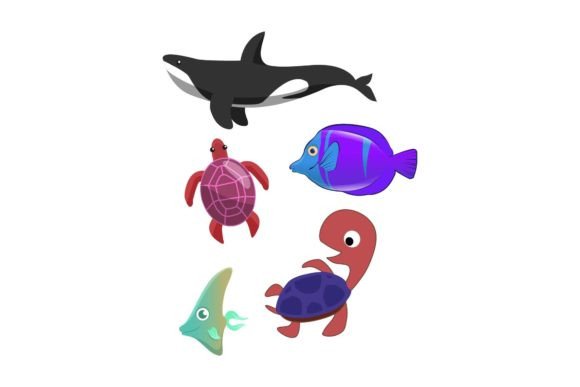
The moment I zoomed in on the AI and SVG files, I noticed how cleanly the underwater animals are grouped—not crammed, not sprawling, but arranged with breathing room between a curious octopus, a smiling seahorse, and two small fish looping around soft coral shapes. There’s no heavy outlining or excessive detail; instead, it leans into gentle curves and open negative space. That’s gold for embroidery. Too many “cute” underwater designs drown in tiny tentacles or overwrought bubbles—but Animal Underwater Vector avoids that trap. It feels like a breath of air, not a visual tide pool.
Where It Shines: Real Projects, Real Customers
Last week, I prepped a batch of organic cotton tote bags for a local ocean-themed pop-up shop. I chose Animal Underwater Vector for the front panel—not as a full-cover print, but as a centered 3.5" motif above the pocket. Why? Because it scaled down without losing charm, and its balanced weight held up beautifully on the slightly textured fabric. Customers responded immediately: “Is that hand-drawn?” (It’s not—but it feels like it.) That handmade impression matters. Whether you’re stitching sweatshirt cuffs, baby bibs, or linen tea towels, this design reads as intentional, not generic.
I also tested it on a lightweight cotton apron—another ideal match. The open layout meant minimal fill stitch density, so the embroidery stayed soft and pliable, not stiff or plasticky. For nursery decor or holiday gifts (think embroidered pillow covers for a beach-house guest room), it delivers warmth without overwhelming. And yes—it translated well to a simple satin-stitch patch, where clean edges and moderate detail made iron-on application reliable and professional-looking.
Where to Pause: Fabric, Fit, and Function
That said, Animal Underwater Vector isn’t magic. On ultra-thin fabrics like rayon challis or stretchy jersey tees, I’d add tear-away + cutaway stabilizer combo—especially under the coral curves, where subtle tension shifts can distort delicate loops. On dark fabric, test thread colors carefully: light aqua or seafoam satin stitch pops, but pale yellow might disappear. And while it’s friendly for 4" hoops, avoid shrinking it below 2.75" unless you’re confident in your machine’s ability to render fine running stitch details—those little fish eyes won’t hold up at 1.5".
Curved surfaces like caps? Proceed thoughtfully. The design’s horizontal flow works best on flat or gently contoured areas—so front panels, tote centers, or pillow fronts are safer than crown curves. And if you’re planning layered garments (think reversible embroidered blankets), remember: dense fill areas may show through lighter backings. A quick mockup in black-and-white helps spot contrast issues before hooping.
What It Adds to Your Craft Business—Beyond the Stitch
For Etsy sellers and small shop owners, Animal Underwater Vector is low-risk, high-return design equity. It’s recognizable but not overused—meaning your listing stands out without needing a custom illustration budget. When customers see it on a personalized baby onesie (“Luna’s Ocean Days”), they feel the care behind the choice. That builds trust. That encourages repeat orders.
It also supports brand consistency. Whether you’re selling digital embroidery files or finished handmade products, this vector holds up across formats: clean for printable mockups, scalable for packaging labels, and adaptable for social media previews. As an Illustrations asset, it’s flexible—but as a Graphics file meant for real-world making, its strength lies in restraint. No unnecessary gradients, no unembroiderable gradients, no hidden raster layers. Just clear paths, intentional spacing, and a mood that lands every time.
Practical Notes from the Hoop
- Always test first—on scrap fabric matching your final product’s weight and stretch.
- Check stitch density visually: look for tight clusters near coral tips and ensure fish fins aren’t overly dense.
- Confirm hoop size compatibility before digitizing—some versions of this design may require minor scaling for tight hoops.
- Review small details in both light and dark mockups—especially the seahorse’s curl and octopus suction cups.
- Use proper stabilizer: medium-weight cutaway for knits, tear-away for stable wovens, and fusible for lightweight linens.
- Verify licensing terms before selling finished items or bundling as part of a commercial embroidery kit.
- If offering as a digital embroidery file, pair it with simple usage notes—crafters appreciate clarity on recommended fabric types and thread counts.
Final Thought: Not Just Another Underwater Clipart
Animal Underwater Vector doesn’t shout. It invites. It fits naturally into a custom apparel line, a thoughtful baby gift, or a small-batch craft fair table—not because it’s trendy, but because it’s *designed* for doing, not just displaying. It respects the embroiderer’s time, the customer’s eye, and the product’s life after stitching. In a world full of overcomplicated vectors, that kind of quiet reliability is rare—and worth keeping in your working library.