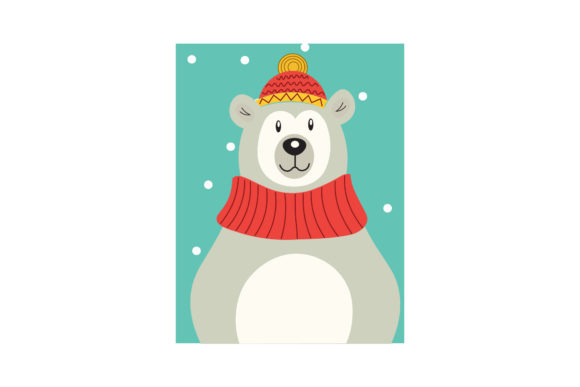
Christmas Animal Character Polar Bear
A Warm, Playful Face That Stitches Well—If You Choose the Right Project
I pulled up Christmas Animal Character Polar Bear last week while prepping a holiday batch of embroidered baby onesies and organic cotton tote bags for my Etsy shop. First impression? It’s cheerful—not cutesy, not cartoonish, but warmly anthropomorphic, with soft rounded edges, gentle eyes, and a subtle scarf loop that reads “festive” without shouting it. The composition feels intentional: centered, balanced, and just detailed enough to hold visual interest at 3–4 inches tall—the sweet spot for most small-batch embroidery projects.
Where This Polar Bear Really Shines
This isn’t a design built for tiny caps or ultra-fine linen napkins. It thrives where clarity, charm, and gentle scale matter: on medium-weight sweatshirts, canvas totes, pillow covers, tea towels, and baby blankets. I stitched it onto a cream-colored organic cotton apron last month—used a light tear-away stabilizer, 40-weight polyester thread, and kept the stitch density moderate. The result was clean, legible, and tactile without looking overworked. Customers commented on how “friendly” and “cozy” it felt—not just festive, but *kind*. That tone matters when you’re selling handmade products people gift to new parents or hang in nurseries.
As an embroidery file, its vector roots (AI, EPS, SVG, DXF) mean it scales cleanly if you need to adjust size for different hoop constraints—but don’t assume automatic optimization. I resized it down to fit a 4" x 4" hoop for a patch project, and while the outline held, the scarf detail softened slightly. A quick manual tweak in my digitizing software tightened it right up. For craft business owners who sell digital embroidery files or printable mockups, this is a solid base asset—especially since PNG and JPG versions are included for previews and listings.
Watch These Real-World Limits
Don’t force Christmas Animal Character Polar Bear onto stretchy fabrics like jersey or thin knits without testing. The facial features—especially the nose and inner ear details—can blur or distort under tension. On dark fabric, I recommend stitching the outline first in white or light gray before filling, just to preserve contrast. And avoid dense fill stitches in the scarf or paw areas unless you’re using a high-quality stabilizer; otherwise, you’ll get puckering on lightweight cotton or textured toweling.
It’s also not ideal for curved surfaces like baseball caps—unless you’re willing to split and reposition elements manually. The symmetrical layout doesn’t adapt naturally to front-panel cap hoops, and the top curve of the head hits the seam line awkwardly. Save it for flat or gently contoured items: sweatshirt yokes, tote bag centers, pillow fronts, or kitchen towel hems.
What It Adds to Your Finished Product—Beyond Looks
This polar bear elevates perceived value. Not because it’s flashy, but because it feels considered—like part of a thoughtful collection, not a random clipart drop-in. When customers see it on a personalized gift (say, a baby blanket monogrammed with initials below the bear), it reads as cohesive, professional, and handmade in the best sense: intentional and warm.
For Etsy sellers and small shop owners, that consistency builds trust. Buyers don’t just buy a polar bear—they buy a mood, a seasonal story, and a sign that you curate your design assets carefully. I’ve noticed repeat buyers specifically ask for “the friendly polar bear designs” now—proof that even simple character graphics can become quiet brand anchors when executed well.
Practical Designer Notes Before You Stitch
- Always test on scrap fabric first—especially if you’re using textured weaves, terry cloth, or blends. The scarf loop and ear contours behave differently on each surface.
- Check thread color contrast early. The design works beautifully in muted palettes (ivory, slate, forest green), but avoid low-contrast combos like light gray on heather charcoal—they’ll mute the expression.
- Review stitch density. If your machine struggles with dense fills, simplify the scarf or reduce fill stitch percentage by 5–10%. It still reads clearly.
- Confirm hoop size compatibility. At full 1920 px × 1280 px resolution, it’s meant for larger hoops—so scale thoughtfully for smaller frames.
- Inspect small details in black-and-white mockups. What reads as charming in color may lose definition in grayscale—critical for embroidery previews or printed tags.
- Compare light vs. dark fabric backgrounds in your design software before digitizing. The shadow under the chin and inner ear shading shift dramatically depending on base tone.
- Use proper stabilizer: light cut-away for knits, tear-away for stable wovens, and fusible + tear-away for towels or napkins.
- Verify licensing terms before selling finished items or reselling the digital embroidery file. Since it’s listed under Illustrations and Graphics, confirm whether commercial use is permitted for physical products or digital redistribution.
Final Thought: A Design That Works With You, Not Against You
Christmas Animal Character Polar Bear won’t wow with complexity—but it delivers something rarer in holiday embroidery: reliability with personality. It stitches cleanly, photographs well, sells consistently across baby, home, and apparel categories, and feels fresh without chasing trends. As a machine embroidery design, it’s not “plug-and-play,” but it’s refreshingly honest about its strengths and limits. That honesty makes it easier to plan around—and more trustworthy for long-term use in your craft business.
If you’re building a seasonal collection, pairing it with simple snowflakes or minimalist trees (not competing characters) keeps focus where it belongs: on warmth, simplicity, and the quiet joy of handmade holiday moments.