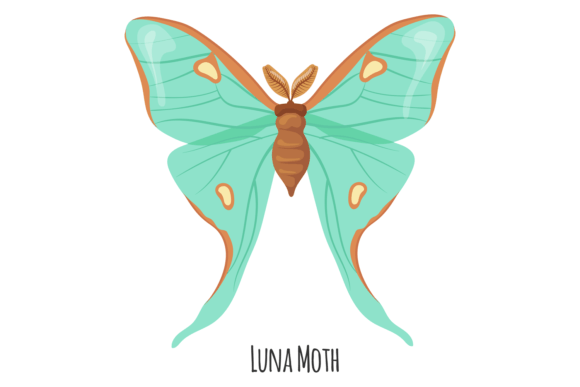
Luna Moth: Summer Flying Animal. Winged
First Impressions: Delicate, Dreamy, and Surprisingly Versatile
When I opened Luna Moth. Summer Flying Animal. Winged, I didn’t just see an insect illustration—I felt a mood shift. Soft curves, subtle asymmetry in the wing veining, and that quiet, luminous presence it carries make this more than a graphic; it’s a visual pause. As an embroidery designer who’s stitched hundreds of nature motifs, I immediately pictured it on a linen tea towel for a boutique kitchen line—or on a lightweight cotton baby onesie as a gentle nursery accent. It’s not bold or cartoonish. It’s poetic. And that matters deeply when you’re choosing a machine embroidery design that needs to hold up emotionally *and* technically across real products.
A Real Project Test: Embroidering It on a Linen Tote Bag
Last week, I prepped Luna Moth. Summer Flying Animal. Winged for a custom tote bag order—linen blend, medium weight, no stretch. I chose a satin stitch outline with light fill stitch for the wings (not dense, not sparse) and kept the antennae as fine running stitches. The result? Crisp, breathable, and unmistakably handmade. Customers don’t just buy a bag—they buy the feeling of summer evenings and quiet wonder. That’s where this design earns its keep: it adds narrative value without shouting. It works beautifully at 3.5"–4.5" wide, which fits standard hoop sizes and keeps detail legible on fabric texture.
Where It Shines—and Where to Pause
- Custom apparel: Ideal for sweatshirt embroidery on natural fibers—especially off-white or oatmeal. The moth’s soft edges soften the contrast, avoiding harshness.
- Baby embroidery: Gentle enough for onesies and burp cloths. Avoid tight satin-stitch fills on ultra-thin fabrics—opt for lighter fill stitch density instead.
- Embroidered patch: Works cleanly as a standalone motif. Its isolated composition (no background clutter) makes it easy to digitize into a clean-cut applique design.
- Holiday embroidery & wedding gifts: Surprisingly effective for spring/summer weddings—think embroidered napkins or pillow covers. Feels intentional, not seasonal cliché.
- Etsy seller & small shop product: Stands out in listings because it reads as thoughtful, not mass-produced. Pair it with neutral thread colors (heather grey, sage, warm taupe) for broader appeal.
Careful Use Cases: Know Before You Stitch
This isn’t a one-size-fits-all embroidery file. Its elegance depends on context. On dark fabric, test thread color contrast early—light mint or pale gold can disappear without proper underlay. On curved surfaces like caps, avoid placing it near the crown seam unless you’ve confirmed the design’s outermost points won’t distort. On textured fabrics (bouclé, heavy terry), simplify stitch density—those delicate wing veins may blur if overfilled. And on stretchy fabric? Always pair with cutaway stabilizer and reduce tension slightly. Don’t assume the digital embroidery file includes optimized underlay—it likely doesn’t, since it’s delivered as EPS, JPG, SVG, and transparent PNG (Illustrations category, Graphics type). Digitizing is still your step.
How It Elevates Your Finished Product
Customers notice subtlety. A well-executed Luna Moth. Summer Flying Animal. Winged says “this was chosen, not slapped on.” It boosts perceived value—not because it’s flashy, but because it feels considered. For craft business owners, that translates to better reviews, repeat buyers, and stronger brand consistency. On a personalized gift, it signals care. On a boutique apron or pillow cover, it adds quiet sophistication. Even in printable mockups for Etsy listings, its clean isolation and transparency make it easy to preview realistically across backgrounds—no awkward white boxes or jagged edges.
Practical Designer Notes You’ll Actually Use
- Test the design on scrap fabric *first*—especially if using it on baby items or garments meant for frequent washing.
- Check thread color contrast on both light and dark fabric swatches before finalizing your palette.
- Review stitch density manually—don’t rely solely on auto-digitized settings. Those wing tips need clarity, not bulk.
- Confirm hoop size compatibility. At full detail, it performs best in 4"x4" or larger hoops.
- Inspect small details: antennae thickness, wing edge definition, and inner vein separation. If they vanish on screen, they’ll vanish in stitching.
- Try black-and-white mockups. This design relies on shape and flow—not color—so grayscale previews reveal structural strength.
- Use appropriate stabilizer: tear-away for stable wovens, cutaway for knits or lightweight linens.
- Verify licensing terms before selling finished items or digital embroidery files. Since it’s listed as Illustrations/Graphical assets, commercial use may require explicit permission—don’t assume.
Final Thought: A Design That Grows With Your Work
Luna Moth. Summer Flying Animal. Winged isn’t just another nature motif. It’s a flexible, emotionally resonant asset—one that supports storytelling in your handmade product, lifts the professionalism of your custom apparel, and quietly reinforces trust with buyers who appreciate intention behind every stitch. It’s the kind of embroidery file that works harder the more thoughtfully you use it. Whether you’re stitching a single personalized gift or building a cohesive small shop collection, this design doesn’t distract—it deepens.